
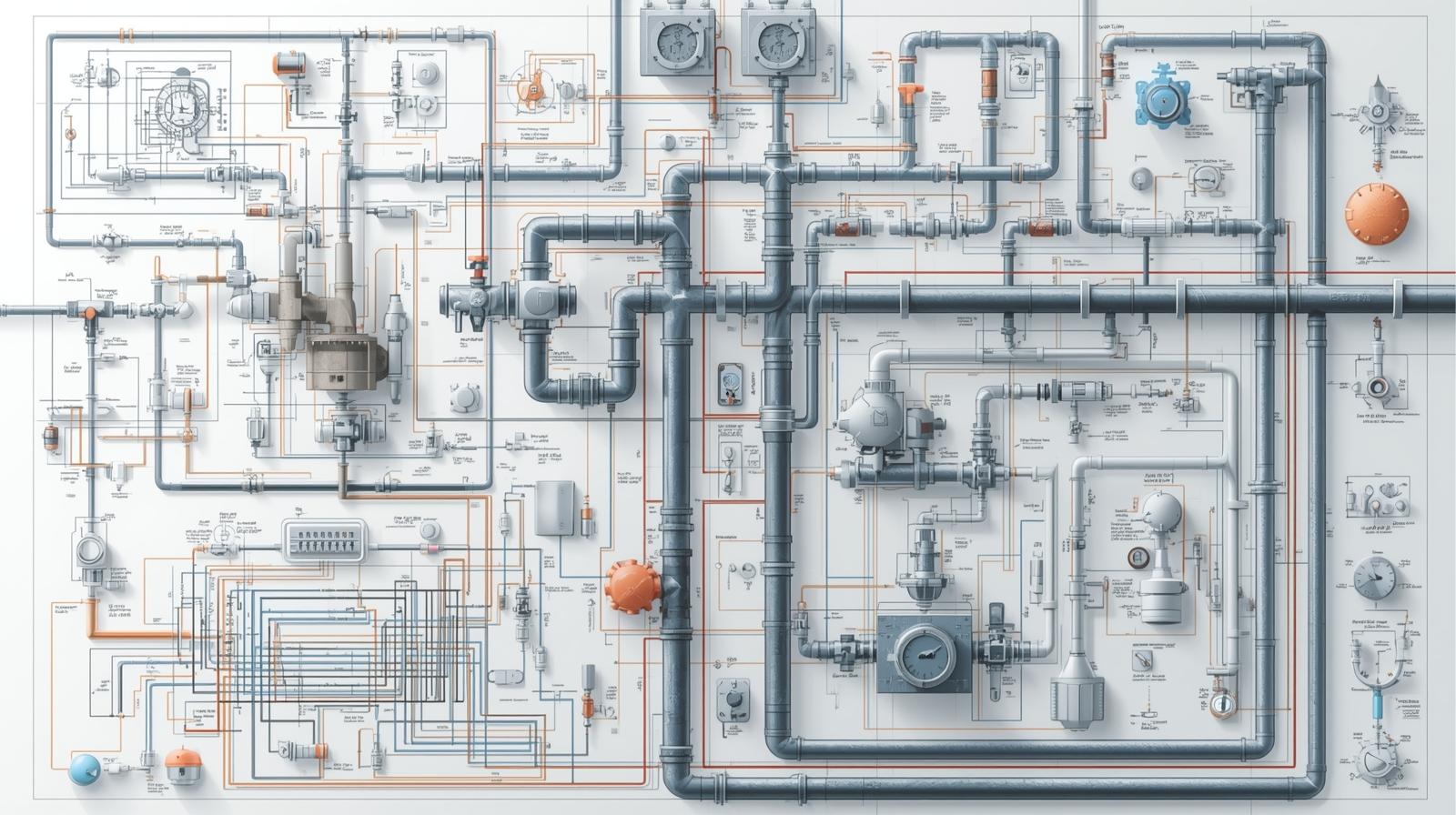
Energy Efficiency in the Boiler Room: Wilo + Buderus Optimization
Energy Efficiency in the Boiler Room: Wilo + Buderus Optimization
The majority of the total cost in heating and hot water systems is determined by pump electricity and fuel consumption. Wilo variable speed pumps combined with the modulation capability of Buderus condensing boilers under the same strategy allow for measurable savings and more stable comfort from the first month onwards. The guide below summarizes the quick-result steps, checklist, and KPIs to be monitored in field applications.
Where Are We Losing Energy?
- Excess flow / fixed speed: The pump runs more than necessary, the return water heats up and condensation deteriorates.
- Short-cycling: The boiler frequently switches on and off; efficiency drops, equipment lifespan shortens.
- Hydraulic imbalance: Some columns are excessively hot, some are cold; comfort and complaint balance is disrupted.
- Incorrect control strategy: Outside air curve, time schedule, setpoints are not optimized.
Step by Step Solution
- Correct Pump Curve (Wilo): Use the Δp-v or Δp-c mode. Verify the design flow and pressure referencing the critical line; perform NPSH and noise checks.
- Buderus Modulation: Activate outside air compensation and staged burner settings to lower the return water temperature for condensation.
- Hydraulic Balancing: Distribute fair flow among columns using primary-secondary separation, balancing valves, and differential pressure control.
- Automation & Monitoring: Make the operation transparent with supply/return sensors, meters, BMS trends, and alarm scenarios.
- Maintenance & Cleaning: Schedule cleaning periods for sludge separators, air purgers, filters, and heat exchangers.
Quick Checklist
- ΔT target: Is the 15–20 °C range achieved?
- Pumps: Is the operating point on the correct curve? Is night mode active?
- Boiler: Is the return water temperature suitable for condensation? (as low as possible)
- Balancing: Are the DP sensor and balancing valves calibrated?
- Time program: Are operating hours and holiday/weekend modes optimized?
KPIs to Monitor
- kWh/m² and fuel consumption (before/after comparison)
- ΔT (supply–return difference), pump kWh, cycle count
- Number of user complaints and temperature deviations
Mini Case: Savings From the First Month
In a residential block, Wilo variable speed pumps were switched to Δp-v mode, the outside air curve on Buderus boilers was readjusted, and primary-secondary separation was applied. Condensation conditions improved, pump power consumption decreased, and a total consumption reduction of 10–20% was observed in the first 30 days. During the same period, temperature complaints significantly decreased.
FAQ
Why is condensation so critical?
Because condensing boilers operating at low return temperature achieve higher efficiency; this means direct fuel savings.
Can I leave old pumps behind?
Fixed speed, oversized pumps are often the biggest loss factor. Switching to variable speed Wilo pumps provides a payback period of 6–18 months in most projects.
Tip: Do not forget to normalize consumption before and after optimization according to the same degree-day conditions for fair comparison.